
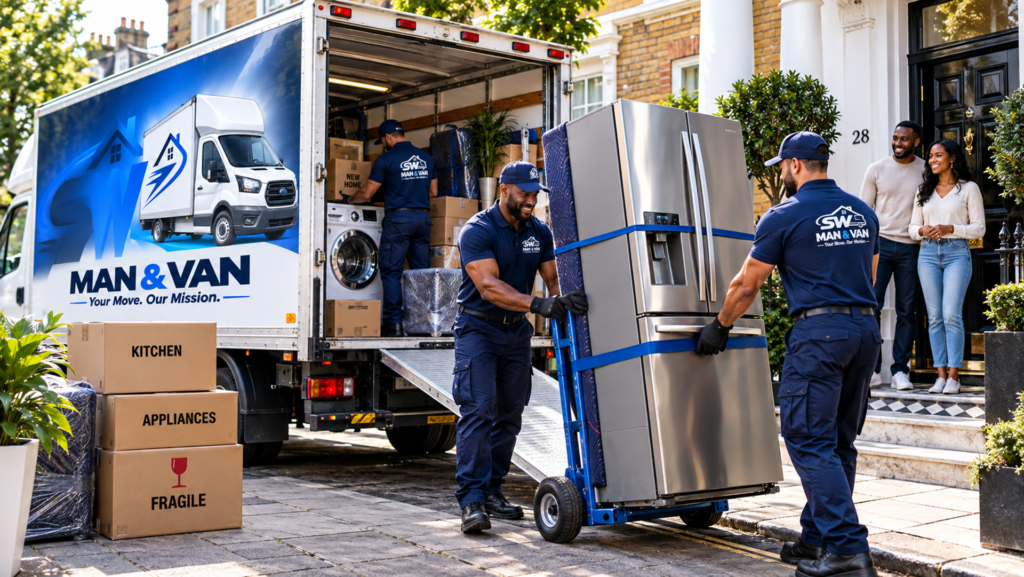
Moving Insurance: Protecting Your Belongings During Your Move
When planning a house move, insurance is something that can easily be forgotten until moving day approaches. However, it is important to understand what protection is available before your belongings are loaded onto a removal van.
Not every removal company provides the same level of protection, and the company's liability may be limited under its terms and conditions. Checking the available cover in advance can give you greater confidence and help prevent unexpected problems if something is accidentally damaged or lost during your move.
Check What Your Removal Contract Covers
Before accepting a removal quotation, carefully review the company's terms and conditions.
A removal company's liability may be restricted to a particular amount or calculated according to specific conditions. This can be especially important when transporting expensive possessions such as televisions, computers, artwork, antiques, designer furniture or other valuable items.
Look carefully for terms such as "liability," "valuation," "goods in transit," "declared value" and "insurance." These terms do not necessarily mean the same thing, so ask the removal company to explain exactly what protection applies to your belongings.
Different Types of Moving Cover
The protection available can vary depending on the removal company, insurer and type of move. Common arrangements may include:
Full or Replacement Value Cover
This type of protection may provide compensation where eligible belongings are accidentally lost or damaged during the move, subject to the terms, exclusions, excesses and maximum limits of the policy.
Always check how the value of an item is calculated and whether minimum or maximum coverage limits apply.
Declared or Assessed Value Cover
With this arrangement, protection may be based on the declared or agreed value of the belongings being transported.
Customers moving particularly valuable possessions should provide accurate information about those items and check whether individual valuables need to be specifically declared before moving day.
Weight-Based Cover
Some transport arrangements calculate liability according to the weight of the goods rather than their replacement value.
This approach may be encountered more frequently with freight or international transportation. Because compensation based on weight could be considerably lower than the actual replacement cost of certain belongings, the conditions should be checked carefully.
Insurance a Professional Removal Company May Carry
Professional removal businesses commonly have different types of business insurance. The precise policies and levels of cover vary between operators, so customers should always check the individual removal company's documentation.
Public Liability Insurance
Public liability insurance generally protects a business against certain claims involving accidental injury or property damage arising from its activities, subject to the policy terms.
For a removal business, this may be relevant if accidental damage occurs to a customer's property while removal work is being carried out.
Goods in Transit Insurance
Goods in transit insurance is designed to provide protection for eligible belongings while they are being transported.
Policies can contain exclusions, excesses, maximum claim amounts and other conditions. Customers should therefore ask about the level of cover rather than assuming every possession is automatically protected for its full replacement value.
Employers' Liability Insurance
Where legally required, employers' liability insurance protects businesses against certain claims from employees who become injured or ill as a result of their work.
CMR Cover for International Road Transport
For certain international road-freight operations, particularly journeys involving European countries, the CMR framework can affect a carrier's responsibilities and liabilities.
If you are moving internationally, ask your removal company which transport rules and insurance arrangements apply to your particular journey.
Check Your Existing Home Insurance
Before purchasing additional moving cover, contact your existing home or contents insurance provider.
Your current policy may provide some protection for belongings while moving home, although conditions and exclusions can apply.
Ask your insurer whether your possessions are covered while being:
Professionally packed or self-packed
Loaded onto the removal vehicle
Transported between properties
Temporarily stored
Unloaded at your new home
Your insurer may also require advance notification of your moving date, destination and chosen removal company.
Checking early gives you enough time to arrange additional protection if your existing policy does not provide the cover you require.
Consider Separate Moving Insurance
If your household insurance or removal company's protection is insufficient, another possibility is arranging specialist moving insurance from an independent provider.
Policies may provide protection against specified risks such as accidental damage or loss, but prices, exclusions and claim limits vary considerably.
Before purchasing a policy, compare different providers and pay particular attention to the excess, exclusions, maxim